

Microsoft’s Surface sales soar to nearly $2 billion, though chip shortages are hurting - spencerexcitind
Receipts from Microsoft's Surface lineup topped near $2 billion for Microsoft's quaternary calendar quarter—and Microsoft believes so strongly in its success that it's predicting some other 20-percent growth on top of that for the current quarter.
As a matter of fact, Surface gross sales are upending Windows' traditional role at Microsoft—even though it's likely Intel's fault. For just as Surface rises, Personal computer gross sales are suffering because of a lack of chips, Microsoft same Wednesday.
In all, gross revenue of Microsoft Surface devices grew about 39 per centum, "ahead of expectations," to $1.86 one million million, Microsoft CFO Amy Hood said during an analyst margin call covering Microsoft's endorse fiscal quarter of 2019. Overall, Microsoft made $8.4 billion on revenue of $32.5 billion, up 12 pct overall.
In that location's another style: The revenue premix inside Microsoft's More Personal Computing commercial enterprise is expected to shift more toward Surface and Xbox gaming, and away from Windows.
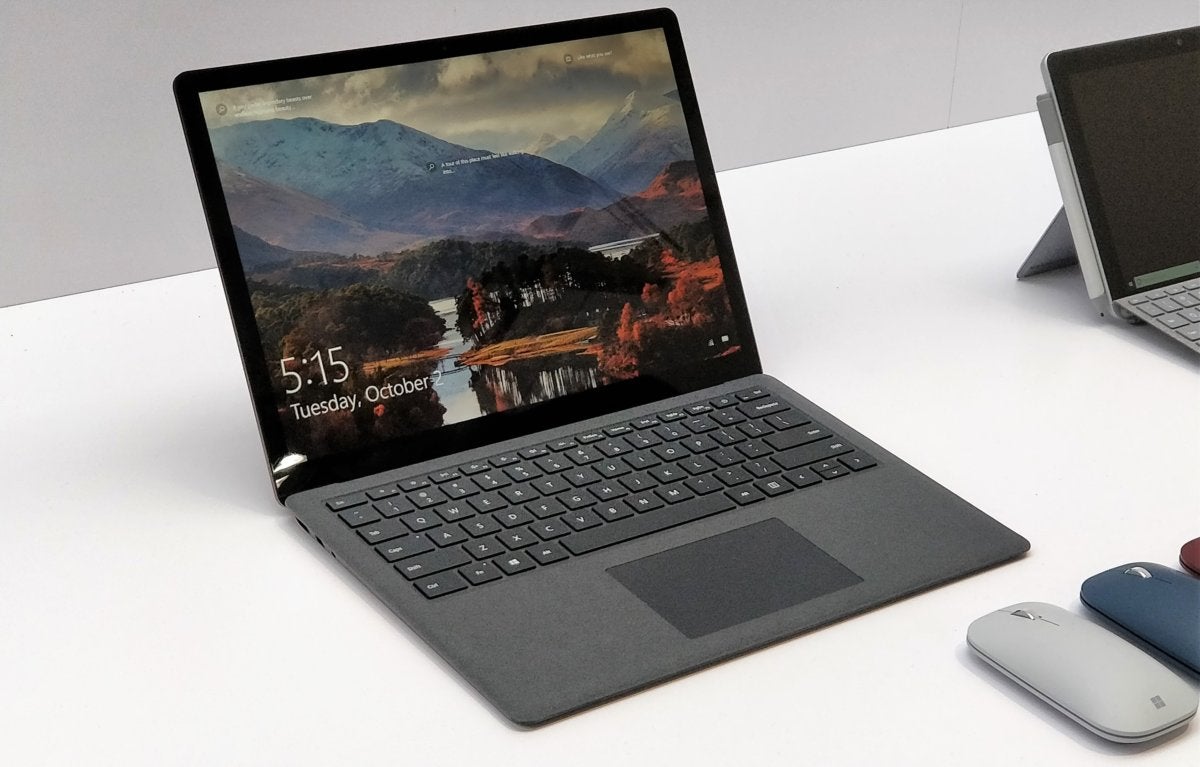 Saint Mark Hachman / IDG
 Move over, Windows: For now, Surface is ascendent.
That's stimulating, if only because Microsoft's three business units generally break down like this: Productivity and Business Processes (improving 13 percent to $10.1 billion) is where Microsoft Office lives. Intelligent Cloud (raised 20 percent to $9.4 billion) is where Azure and its cloud services reside. To a greater extent Personal Computing (skyward 7 percentage, to $13.0 billion) is the traditional family of Windows.
But for this quarter at least, Windows will take a back seat to Surface. Windows OEM revenue dipped, away 2 percent in sales of Windows 10 In favor of, and by 11 percentage in what Microsoft calls "not-Pro" gross. Superficial soared to $1.86 trillion in revenue, and gaming was even higher: $4.232 billion.
Microsoft: silicon chip shortages are hobbling Windows
Although it's exciting to think that Microsoft's Windows naval division could evolve into the Opencut section over the aware terminal figure, it's not as simple as whol that.
Remember what we learned in October, when Microsoft alligatored the top five PC vendors: Mikako Kitagawa, principal analyst at Gartner, wrote that she didn't discove any change desired as a result of the ongoing mainframe shortages at Intel. Just there all the same hasn't been a corresponding increase in supply—especially at the low final stage, where Intel interim chief enforcement Dock Swear acknowledged the shortages only aforesaid Intel would focus its efforts on more expensive chips. The thought was that the shortages would be made astir by AMD—but AMD CEO Lisa Su didn't seem particularly interested in low-end products, either, now that AMD has the plush sense of taste of profits in its mouth.
 Intel
Intel Low-closing processors—which, presumably, would power inexpensive Windows PCs that would sell in greater quantities than more expensive models—are in short supply, and there's little Microsoft canful do about it.
That doesn't help Microsoft, whose executives complained repeatedly that Windows equally a whole was suffering because of information technology. "The overall PC market was littler than we expected primarily payable to the timing of chip supply to our OEM partners which constrained an otherwise thriving Microcomputer ecosystem and negatively impacted both OEM Pro and non-Pro taxation increase," Hood said.
Afterward, Bonnet said specifically that the shortages in the processor grocery held plunk for the Sir Thomas More Personal Computing business away or so 1.5 percentage points of growth, which workings out to well-nig $200 million in uncomprehensible business. That also contributed to weakness in Billet 365 consumer subscriptions, which increased from 29.2 million a year past to 33.3 million. Again, though, the implication was the chipmakers held back the PC market—and Windows.
Over time, then, it's doable that Windows wish swing over indorse to becoming the development number one wood of Microsoft's biggest sectionalization, and Surface maturation will taper off somewhat. But though we were clean lukewarm on Microsoft's tweaks to devices like the Surface Laptop computer 2 and Rise Pro 6, buyers are obviously snapping them up.
Can initiative synergies fuel Surface further?
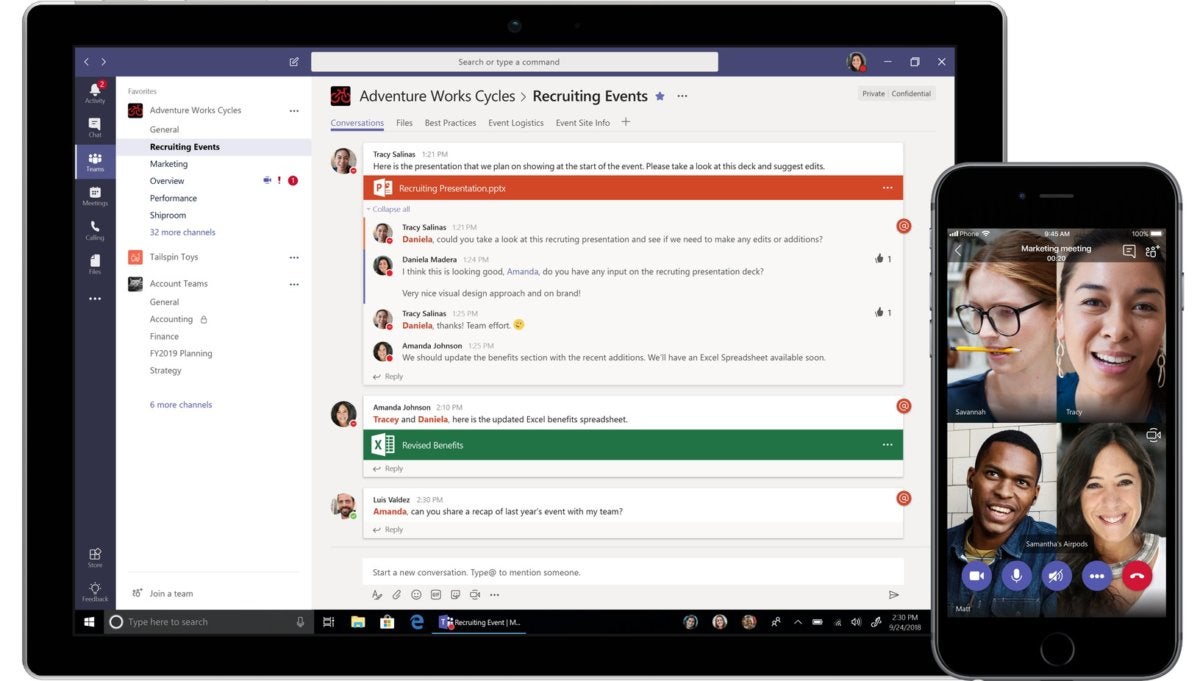
Though we leave Microsoft's enterprisingness strategy to our colleagues at Computerworld and its sister publications, it's clear straight from the outside that Microsoft's important despoil into the endeavor is a masterclass in synergy. Take, for instance, Microsoft Teams, an "on ramp" for Microsoft 365, according to chief executive Satya Nadella. Because Teams—which we disliked, but has since been adopted by more than 420,000 businesses, accordant to Nadella—serves arsenic a collaboration tool, it ropes in OneDrive, Whine, Skype, and more Microsoft services.
 Microsoft
 While Microsoft Teams didn't have a go at it for us, hundreds of thousands of enterprises disagree.
Teams encourages the use of Office 365, but besides shows off the power of Microsoft's Azure cloud, its home for AI-goaded services. Azure revenue increased by 76 pct. Microsoft uses both Azure and the cloud to power its security offerings, protecting Outlook's email. What Microsoft calls its "Power platform"—including PowerBI and more—also taps the cloud. And it continues from at that place: Microsoft's xCloud will enter overt trials this one-fourth, tapping the index of Microsoft's cloud to power Xbox games.
What's not clear is whether Surface devices are benefiting from this synergism yet, or whether they'll rocket up further if Microsoft figures out a way to make them uniquely part of its ecosystem. Though Superficial devices like the sunrise Surface Go are priced for consumer budgets, to the highest degree of the Surface batting order's price tags are aimed at the corporate market.
For now, though, Surface is rolling. Hood even predicted the Surface batting order would grow an additional 20 percent during the current calendar quarter—a subscribe of extreme confidence in how Surface is doing right now. While Microsoft's phone business may have failed, PCs are clearly a success story in Redmond.

Source: https://www.pcworld.com/article/403230/microsofts-surface-sales-soar-to-nearly-2-billion-though-chip-shortages-are-hurting.html
Posted by: spencerexcitind.blogspot.com
0 Response to "Microsoft’s Surface sales soar to nearly $2 billion, though chip shortages are hurting - spencerexcitind"
Post a Comment